Step outside in July in Indio, and you can feel your walls baking. In our desert heat, paint is not just about style. It affects comfort, lifespan, and even how often you repaint.
Choosing exterior paint colors for desert homes can be different from painting in a coastal or mild climate. Intense UV, 110°+ days, and blowing sand all change how colors look and how long they last.
If you live in Indio, La Quinta, Coachella, or nearby, the right color palette keeps your home cooler, hides dust, and still looks clean and modern for years.
How Desert Sun in Indio Affects Exterior Paint
Before picking colors, it helps to know what the desert does to paint.
The Coachella Valley sun is strong. Dark colors soak up heat, so stucco and siding get hotter and move more. That movement leads to hairline cracks, chalking, and peeling. Lighter colors reflect more light and heat, so walls stay cooler.
You may see the term LRV, or Light Reflectance Value. It is a number from 0 to 100 that shows how much light a color reflects. Higher LRV means a lighter, more reflective color. For desert homes, mid to high LRV shades usually perform better on large wall areas.
UV rays also bleach out strong colors. Deep reds, bright oranges, and strong blues can fade fast in the Indio sun. The more saturated the color, the more you tend to see chalking and uneven fading.
Wind and dust from golf course areas or open lots add another layer. Very bright whites can show dirt streaks, while very dark tones show every salt and mineral mark from irrigation. Desert-friendly palettes sit between those extremes.
Best Light, Cool Exterior Paint Colors for Desert Homes in Indio
When you choose exterior paint colors in Indio, think about both heat and light. The goal is soft, reflective, and calm.
Warm whites and soft creams
Pure, stark white can look harsh in Indio sunlight. It can also cause a lot of glare.
Warm whites and soft creams are easier on the eyes. They still reflect plenty of heat, but the small touch of beige, ivory, or almond keeps the home from looking too bright.
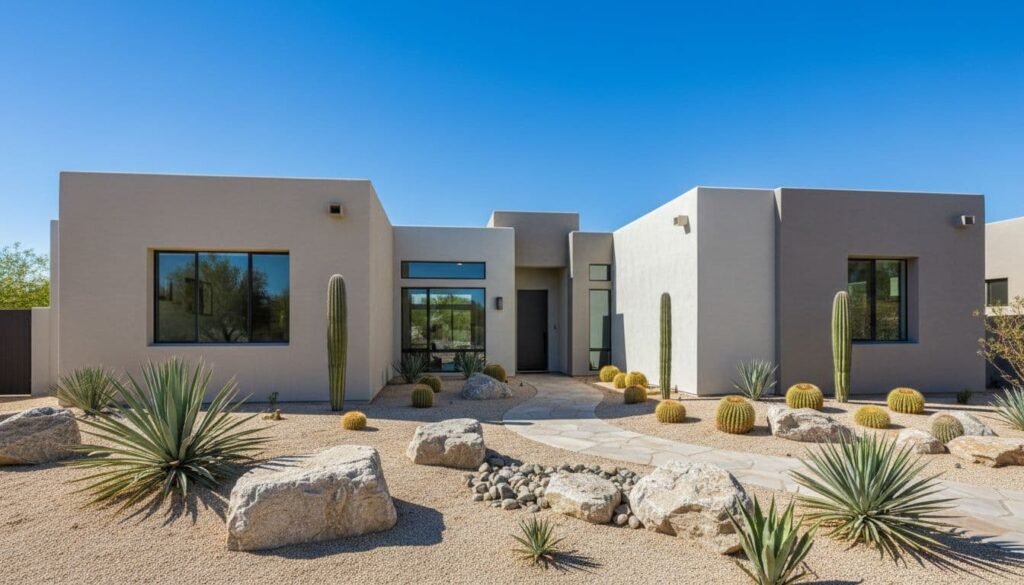
These shades work very well on stucco. The slight warmth hides minor cracks and patchwork that you often see on older Indio and Coachella homes. They also pair nicely with darker clay tile roofs and desert landscaping.
Use warm white or soft cream on main walls, then add a slightly deeper cream or tan on trim and fascia for gentle contrast.
Sand, beige, and greige tones
Sand and beige are natural fits for desert homes. They echo the color of the soil and nearby mountains, so they look right in full sun.
Medium-light sand tones have enough LRV to stay cooler than darker browns. They also hide dust, sprinkler stains, and wind-blown dirt better than bright whites.
Greige colors (a blend of gray and beige) are popular in newer neighborhoods and remodels. In our desert light, cooler greiges can shift blue or look cold in the afternoon. Warmer greige tones, with a hint of brown or taupe, usually feel softer and more natural on stucco and block walls.
These colors work very well with bronze windows, tan roofs, and paver driveways.
Pale blues and soft greens
Light blues and greens can make a desert home feel cooler, even if the temperature is the same. They give a visual sense of shade and water.
Pale, grayed-down versions work better than bright pastel colors. Think soft blue-gray, green-gray, or a whisper of sage rather than strong teal.
In Indio sun, these colors can look lighter outdoors than they do on the paint chip. That is another reason to stay soft and muted. They are great choices for:
- Main body color on a modern stucco home
- Front doors or shutters on a mostly neutral house
- Covered patios or porches where you want a cooler feel
Just keep them light to moderate in depth so they do not absorb too much heat.
Accent colors that pop without overheating
You can still use bold color in the desert. The key is placement and amount.
Good spots for deeper accents:
- Front door
- Shutters
- Window trim
- Metal railings or gates
Terracotta, rusty brick, deep olive, charcoal, and chocolate brown all look sharp in small doses. They tie in with mountain tones and desert sunsets without cooking your stucco.
Avoid painting full walls or large garages in very dark colors. The surface will get hotter, and the paint and stucco will age faster. Dark accents on a light or medium body color give you contrast without the heat load.
If you want professional help balancing body, trim, and accent shades, our Exterior house painting services in Indio are set up for desert conditions.
Matching Colors to Stucco and Other Exterior Materials
Most homes in Indio and La Quinta use stucco, often with tile roofs and some wood or metal trim. Each surface reacts to color a bit differently.
Stucco has texture and shadows, so colors read slightly darker and more varied. A light greige on smooth siding can look deeper and richer on rough stucco. When in doubt, test a shade that is one step lighter than you think you want.
Wood fascia, eaves, and trim move more with heat and cold. Dark paint here can crack and peel faster. Light to medium trim colors help control that movement and reduce maintenance.
On block walls or privacy fences, earth tones work very well. Sand, tan, and soft taupe hide dirt, irrigation stains, and minor cracks along shared property lines.
For homes with stone, brick, or paver accents, pull a color from the lightest stone and use that as your wall or trim base. This ties the whole exterior together and avoids clashing tones.
Practical Tips for Choosing and Testing Colors in Indio
The same paint color can look very different at 8 a.m. and 3 p.m. in Indio. Testing is not extra work. It is how you avoid repaint regret.
Here is a simple approach that works well in the Coachella Valley:
Start lighter than you think. Desert light brightens colors. A “medium” tan chip can look much darker on a full south-facing wall.
Look at LRV. Try to keep the main wall colors in the mid to high LRV range. This reflects more heat and reduces stress on stucco and caulk.
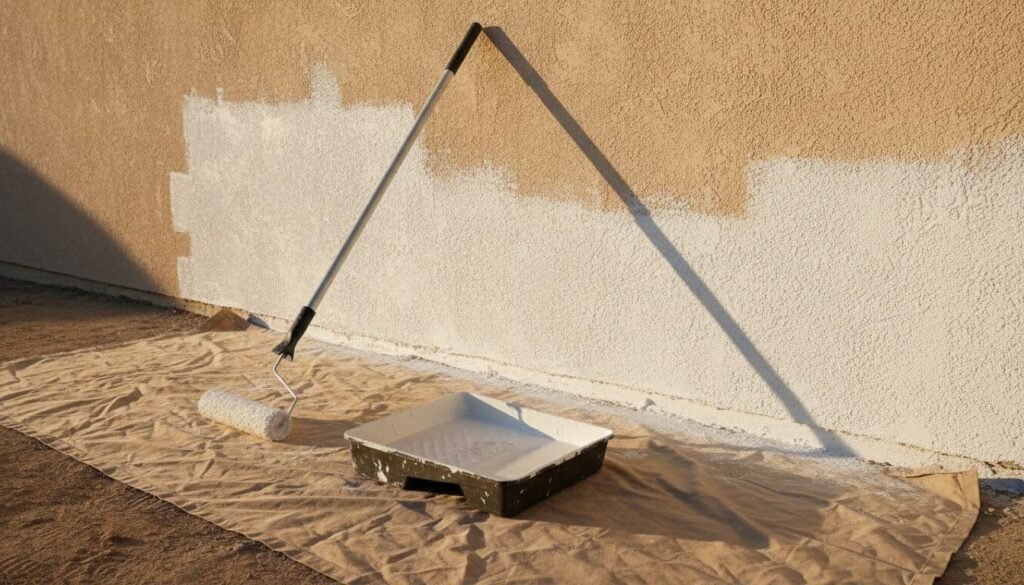
Paint large test patches. Put at least 2-by-2-foot samples on different sides of the house: one in full sun, one in shade. Avoid tiny swatches; they do not show the real effect.
Check colors at three times of day. Morning, mid-day, and late afternoon. In Indio, late-day sun can make cool grays look almost blue and make cream shades look more yellow.
Think about your roof and hardscape. If you have a red tile roof, a very cool gray house can fight with it. If you have a darker composition shingle roof, a warm white or light sand tone often balances better.
If you want extra character, textures, or specialty finishes, you can explore options like limewash or soft faux stone effects. These work especially well on feature walls and patios; see our options for custom decorative painting in Indio for ideas.
Bringing It All Together
The best exterior paint colors share a few traits. They are lighter, higher LRV shades that reflect heat, stand up to UV, and still look rich in harsh sunlight.
Warm whites, sand and greige tones, and pale blues or greens all work well on stucco and other common exterior materials in the Coachella Valley. Deeper colors belong on accents, not whole walls, so your paint lasts longer, and your home stays cooler.
If you plan to repaint soon, start with real test patches, watch them through the day, and pay attention to how your home feels from the street and the driveway. With a smart color plan and the right products for our desert climate, your exterior can stay fresh, calm, and comfortable for many summers to come.